Thursday, July 29, 2010

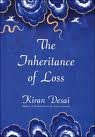
The Inheritance of Loss by Kiran Desai


In this enchanting and hauntingly beautiful book, I have discovered in Kiran Desai what might be called the reincarnation of Salman Rushdie in female form, at least from the standpoint of prose. The magical language and drama in this wonderful book also calls to mind Arundati Roy's The God of Small Things. It should also be noted that Desai won the Man Booker Award for this novel, as did Roy for hers. At the highest level it is about what the British left behind in India and how Indians have been shortchanged - this loss has been their inheritance. It is a story about how the classes continue to struggle after colonialism. For many Indians, both at home and overseas, it seems hopeless. At the outset, the question is posited - "Could fulfillment ever be felt as deeply as loss ?" (p. 2). Perhaps this is so for only one character, revealed on the final page of the book. Dealing with issues of globalization, multiculturalism, terrorism and inequality, Pankaj Mishra wrote (2/12/06) for The New York Times "it seems the best kind of post-9/11 novel."
The story takes place in Kalimpong, in the northernmost area of West Bengal, high in the mountains under a "looming" (p. 197) Kanchenjunga, the world's 3rd tallest peak, "solid, extraordinary, a sight that for centuries had delivered men their freedom and thinned clogged human hearts to joy." (p. 277). The action is set in 1985 (p. 8) in a region with factions derived from the neighboring states of Nepal and Bhutan, and the Indian state Sikkim (formerly a sovereign country). Desai lays the political groundwork - the Indian-Nepalese "wanted their own country." (p. 9). It is important to understand the politics in order to appreciate the context of the novel. The Gorkha National Liberation Front ("GNLF") is a political party in northern West Bengal, India, formed in 1980. During the 1980s, the GNLF led an intensive and often violent campaign for the creation of a separate Gorkha state in the Nepali-speaking areas in northern West Bengal; the movement reached its peak around 1985-1986, the time frame of the book. In 1988, the GNLF signed the Darjeeling Hill Accord, which created the Darjeeling Gorkha Hill Council in exchange for the GNLF giving up its demand for Gorkhaland for the time being.
Specifically, the book is about the lives of two adolescent Indians from very different backgrounds, Sai, the adopted granddaughter of Anglophile Judge Jemunhai Patel, a member of the Indian Civil Service ("ICS") who ultimately questions her own Anglicised lifestyle and Biju, the Judge's cook's son, who has gone to New York as an illegal immigrant, trying to make a buck in a city he never engages. Meanwhile, Sai falls in love with her Nepalese tutor, Gyan, despite being in different castes - his reciprocity is sorely tested by his obligations to the GNLF. Gyan grapples with this conundrum "how could you have any self-respect knowing that you didn't believe in anything exactly ?" (p. 260). In his black and white world, ultimately he chooses political belief over love.
As this budding romance evolves, Desai does a wondrous job exploring the adolescent girl's discovery of her own sexuality and there is a precious line describing her "plumpness jiggliness firmness softness, all coupled together in an unlikely manner, must surely give her a certain amount of bartering power ?" (p. 74).
The book is filled with oddball characters, the aristocratic Lola and her sister Noni who live at Mon Ami, a neighboring house, and the neighbors Uncle Potty (farmer and drunk) and his friend Father Booty. I commiserated with Uncle Potty's food preferences "No ghas phoos, no twigs and leaves ! said Uncle Potty firmly. He never ate anything green if he could help it." (p. 212). Along this line, Lola makes a funny comment (p. 214) attributable to her now-dead husband about "real" Chinese food. "Chinese food in China was quite another matter. A much worse matter, in fact. He described the hundred-day-old egg...buried and dug up as a delicacy, and everyone groaned with horrified delight." In my travels to China, I have learned that indigenous food is tough to swallow.
Ultimately, the GNLF wreak havoc on this small hill town, destroying everyone's lives in the process. Despite the tumult, Biju, makes the trip back home, is stripped of all his worldly possessions, but in the end reunites with his father. He is virtually the only character who remains faithful to his spiritual beliefs and avoids the emotional loss that all the other characters succumb to.
It is forgivable, but Desai goofs a few times on period culture. She uses the term "PC" (politically correct) (p. 201), which did not come into current usage until 1990. Also there is mention of a laptop (p. 285) computer at an airport scene, oops ! On language a funny coincidence, she uses the word "rictus" (p. 232) just as did Martin Amis, reviewed below.

Tuesday, July 20, 2010

Unaccustomed Earth by Jhumpa Lahiri


Jhumpa Lahiri is perhaps best known through her novel Namesake that was made into the 2006 feature film by the fabulous director Mira Nair (Salaam Bombay!, Mississippi Masala, Monsoon Wedding). In Namesake she explores the adjustments Indian immigrants make in coming to America. Unaccustomed Earth takes it a step further and examines relations across 3 generations, taking into consideration the nuances of Indians born in the U.S. Nee Nilanjana Sudeshna, her Kingston, Rhode island, kindergarten teacher insisted on calling her the easier pet name Jhumpa. Although born in London, she considers herself American, having moved to the U.S. at age 3. Cynical readers have dubbed her an ABCD or American-Born Confused Desi, usually reserved for Indians born in the U.S. The term "desi" comes from the word "des" (homeland) in Sanskrit and Hindi; "desi" is used to mean anyone from the Indian subcontinent.
The short stories in this collection are by no means complex. In fact, for the most part, very little happens. The pleasure of the text, to quote Barthes, is in the art of the story teller, the mastery of language. Of course, the theme is always related to gender roles and the Bengali immigrant experience and letting go of culture and homeland traditions in a new world. Most of the stories take place in Boston and Cambridge. Lahiri knows the turf, as anyone who has lived in Boston will recognize the "view of the Citgo sign, draining and filling with color" (p. 214), a local icon which in a bizarre timing coincidence received mention (7/25) in the Sunday New York Times Sports Section (p. 3), since over 9,000 feet of lights were receiving brand new LEDs, 1200 feet from Fenway Park home plate. Back to the text - however, on more than one occasion she calls the Harvard Bridge the Mass Avenue Bridge (p. 281). Just an aside, but I got a kick out of a reference to Jan van Eyck's famous painting The Arnolfini Marriage, in which there appears "a convex mirror that reflected everything in the painting" (p.145). This optics riddle is the subject of a well known textbook problem on geometrical optics by Hecht and Zajac, Optics (1974 edition, p. 163).
In the eponymously titled opening story, a young married woman has made the choice to abandon her legal career, much to the consternation of her visiting father, a recent widower. The story is more about the fragility of their relationship, about what they fail to say to each other over the years. In the final scene, she inadvertently discovers a misplaced postcard addressed to her father's new found female companion, totally unbeknownst to her. All the meaningful conversations that never happened about her strained relation with her Latino husband and her father's life changes never take place, the reader must decide - Is it Indian culture or more universal ?
The best story, Hema and Kaushik, is in 3 parts. The first two parts are related through the minds of the young girl Hema and subsequently, her childhood friend Kaushik. The first part describes foremost the difference in cultural traits between two Indian families living in the same house with each other in Boston for one month, as a result of a second Indian family, far less conservative and wealthy, getting settled. Hema (six) is taken by the older boy Kaushik (nine). The second part relates Kaushik is a college student returning home for the holidays and his reaction to and resentment of his father's new Bengali wife, and his anguish over the loss of his mother to cancer. In the final part, the two protagonists have a chance meeting in Rome years later. Lahiri is a master at tempo and the reader feels the rush as the two childhood friends are reunited. Alas, Hema is on her way to Calcutta to wed a less than satisfactory mate though an arranged marriage - her tempestuous relation with her childhood friend is quenched but has no hope for survival. This part is much less about Indian cultural values and more about the general human condition. Here the author really transcends the themes that make up the earlier stories.
Charlie Rose interviewed her about the book (5/27/08) (http://www.charlierose.com/), complimenting her on her remarkable observational powers but floors her when he paraphrases Time critic Lev Grossman, by saying that there is no human or narration suspense in her stories. Specifically, Grossman states "Lahiri's stories are grave and quiet and slow, in the 19th century manner. They don't bribe you with humor or plot twists or flashy language; they extract a steep up-front investment of time from the reader before they return their hard, dense nuggets of truth. It's difficult to quote from her stories: they refuse to sum themselves up with a neat final epiphany, and Lahiri doesn't write one-liners" (5/8/08) (www.time.com/time/magazine).

Saturday, July 10, 2010

The Second Plane by Martin Amis


Son of Sir Kingsley Amis (famous English novelist), Martin Amis is known as the enfant terrible of British fiction. He is a controversial essayist as well. He is author of some of Britain's best-known modern literature, influenced by Nabokov and Bellow, and has influenced new writers such as Zadie Smith and Will Self. He is a true littérateur. This controversial book of 14 essays about 9/11 and subsequent events is culled from articles first appearing in the Guardian, The Observer, The Times, The New Yorker, and The New York Times between 2001-2007. The book was published as a reaction to Marxist literary critic Terry Eagleton (fellow U. Manchester professor) accusing Amis of racism based on an interview conducted by Ginny Dougary of The Times on Sept. 9, 2006 (http://www.ginnydougary.co.uk/). This collection of published essays is loaded with insight, some of it over the top. The reader should note that these essays transgress the suicide bombings in London in July 2005.
The first essay is eponymously titled The Second Plane and was written only a few days after 9/11. The opening sentence is poignant - "It was the advent of the second plane, sharking in low over the Statue of Liberty: that was the defining moment. Until then, America thought she was witnessing nothing more serious than the worst aviation disaster in history; now she had a sense of the fantastic vehemence ranged against her." I remember turning on the TV in my office at about 9am that day and seeing the second plane in real time. Amis nails it. "It was well understood that an edifice so demonstrably comprised of concrete and steel would also become an unforgettable metaphor. The moment was the apotheosis of the postmodern era - the era of images and perceptions." Amis is well known for commenting on the absurdity of the postmodern condition. He is keenly aware of Americans' isolationism - "Various national characteristics - self-reliance, a fiercer national patriotism than any in Western Europe, an assiduous geographical incuriosity - have created a deficit of empathy for the sufferings of people far away." Later in the book (p. 53) he sees the attacks as a paradigm shift. "Paradigm-shifts open a window; and, once opened, the window will close." September 11 was instantly unrepeatable, the tactic was obsolete by 10 a.m. the same morning, witness the start of the rebellion on United 93, once passengers heard on cell phones that the twin towers had been hit. It is curious to note that United 93 was delayed by 30 minutes - had it left on time, it may have met it's White House or Capital target !
Reviewers of the book have found Amis lacking in authoritative knowledge of key areas under consideration, ironically, he engages just this topic in the second essay The Voice of the Lonely Crowd. "An unusual number of novelists chose to write some journalism about September 11 - as many journalists more or less tolerantly noted. I can tell you what these novelists were doing: they were playing for time. The so-called work in progress had been reduced, overnight, to a blue streak of autistic babble." Amis reminds us that "novelists don't normally write about what's going on; they write about what's not going on." Good one. Unfortunately, many critics felt that in the case of this book, Amis should have heeded his own advice. I can tell you words like Marfanic, sordor, rictus, and antinomian are not typical journalistic words. He disparages all religion "To be clear: an ideology is a belief system with an inadequate basis in reality; a religion is a belief system with no basis in reality whatever.....if God existed, and if he cared for humankind, he would never have given us religion." On this I could not agree more.
In The Wrong War, Amis is thinking how Bush must have reasoned, that once we launch an attack, "Then at last we will have Saddam's full cooperation in our weapons inspection, because everything we know about him suggests that he will use them all." Of course, Saddam was no friend to Islamists, particularly Shiites (Iran axis), he is "in reality, a career-long secularist - indeed an "infidel" according to bin Laden." Amis opines that Bush was more religious than Saddam ! It is ironic when Tony Blair remarks in an interview conducted by Amis how politics and religion got so intermingled in America under Bush.
Amis creates a short story, In the Palace of the End, in which many body doubles, a spoof on Saddam's public body doubles, partake in the orgiastic excesses of Palace life as well as playing a role in the torture chambers. A reviewer has noted that considerable effort has been put into offering neologisms for torture techniques. Amis introduces the reader (p. 50) in Terror and Boredom : The Dependent Mind to the term "Islamism" wherein Islam is not only a religion but also a political system and that modern Muslims must return to the roots of their religion and unite politically. Much criticism has been leveled against Amis that he is not merely an "Islamismophobe" (p.71) but an "Islamophobe" as well. In his writings his targets shift from radicals to the Muslim world at large.
In The Last Days of Muhammad Atta, he creates a constipated character who has not moved his bowels since May. When deciding what day to attack, it was suggested "Two branches, an oblique stroke, and a lollipop" (p. 103). In Iran and the Lord of Time, Amis postulates "Rule number one: no theocracy can be allowed to wield a nuclear weapon. For the Iranians, as an Israeli official put it, Mutual Assured Destruction "is not a deterrent. It's an incentive.""
Amis is greatly concerned with Muslim demographics, western women in Europe produce an average of 1.4 children (2.1 is required for maintaining the status quo), Muslim women are producing 3.5 children. He's assuming all Muslims are radical.
Hard to tell on this blog, but book cover photo is view looking up, standing between twin towers, smoke coming from the South Tower. It is a spectacular shot !

Thursday, June 24, 2010

The Girl Who Kicked the Hornet's Nest by Stieg Larsson


You know the Millennium Trilogy has entered American pop culture when Nora Ephron, film director (Silkwood, Sleepless in Seattle, When Harry Met Sally), writes an hysterically funny satire in The New Yorker (July 5) entitled "The Girl Who Fixed the Umlaut." The humor is completely lost in translation, I won't try to paraphrase, so I urge the reader to enjoy Ephron's oh-so-clever piece at www.newyorker.com/humor. For all but die hard fans, this book suffers a bit from TMI, Ephron gets it right when she mimics a route in Stockholm that sounds like a GPS on steroids - "[Mårtensson] got into his Volvo and drove towards the city but turned off to go across Stora Essingen and Gröndal into Södermalm. He drove down Hornsgatan and across to Bellmansgatan via Brännkyrkagatan. He turned left onto Tavastgatan at the Bishop's Arms pub..." (p. 251). All jesting aside, the Stockholm City Museum offers Millennium Walking Tours, check it out at http://www.stadsmuseum.stockholm.se/. In fact the Södermalm area south of Folkungagatan ("SoFo," I mean, what else could it be ?) has become the trendsetting epicenter of the city. Get this, The New York Times Sunday Travel Section just did an article (June 20) entitled "Not so Sinister in Stockholm," detailing the M3 neighborhood.

This final volume can be considered the "day of reckoning" on the events that have transpired in M1 and M2. A silent but omnipresent actor enters the stage, the Government, in the form of the Section for Special Analysis (SSA) (p. 82), Säpo's autonomous top secret division, run by some die hard Cold Warriors. Since misinformation is the basis of espionage (p. 144), the author succeeds in building a very complex dialogue - the reader is typically prepped on reality and can see the misinformation propagate. M3 showcases true storytelling mastery. Larsson is making a bigger statement here, related to the constitutional rights of LS and the crime against her for which the State is guilty (p. 279). The SSA is acting outside it's constitutional mandate (p. 281) in a conspiracy. Many readers complain of the protracted discussions of these human rights issues, but Larsson is choosing to use his crime thriller to make a case.
Lisbeth Salander has been compared to Lara Croft (popularized in the 1991 Angelina Jolie film Tomb Raider) and such a reference appears in M3 when she is communicating with her hacker partner Plague (p. 240) and an animated Lara Croft-like figure stepped out on her PDA.

Fröken Salander is a poster girl for injustice. Larsson, a self proclaimed feminist makes the case again and again that women have been victimized for, shall we say. Millennia ? As a preface to M3, he posts a little piece about Amazon women (p. 147) and the etymology of the word "Amazon." Later he references the Fon of Dahomey, a women's army in west Africa, finally defeated in 1892.
The book is rife with vigilantism, consider the private investigator Linder - "[Linder] knew that technically she had committed one crime after another this evening, including unlawful restraint and even aggravated kidnapping. She did not care. On the contrary, she felt almost exhilarated." (p. 401).
M3 is about hacking and of course we learn in M1 and M2 that Lisbeth is a hacker extraordinaire, under code name Wasp. So the Palm Tungsten T3 PDA (p. 237) is pictured here as co-star ! Lisbeth is held captive in the hospital or jail for the first 25 chapters of the book. As such her control is truly "action at a distance," all through her PDA, which is smuggled into her hospital room. In the end, all the loose ends are tied together, one could say "Larsson nails it." But, you'll see what I mean.
Post script - I cannot overstate how I enjoyed the reference to Sergio Leone's spaghetti western masterpiece, Once Upon a Time in the West, as a ring tone for Monica Figuerola's mobile phone (p. 471).


The Girl Who Played With Fire by Stieg Larsson

Knowing something of Stieg Larsson's life and having digested the characters and themes in the first book ("M1"), one becomes so alert to art imitating life in M2. It is almost as if Larsson is using the Millennium trilogy to play a complex game of Second Life. In the first book, we see so many instances of his characters reading crime novels by famous authors, especially Astrid Lindgren (of Pippi Longstocking fame). In fact, he wants them to be well read. When Lisbeth Salander receives her mother's modest inheritance, she makes an anonymous contribution to Stockholm's crisis centres for women (p. 104). Larsson imbues his characters with his own personal tastes. At one point (p. 234), he has Blomkvist listening to Debbie Harry singing Maria, great choice !

Anonymity is a central theme - LS goes out of her way to maintain her old apartment as a decoy address for mail collection, and installs her friend Mimmi there as caretaker. "The address on Lundagatan was on every public register and database, and in all those years she had never had the means to improve her security; she could only stay on her guard. Now the situation was different. She did not want anyone to know her new address in Mosebacke." (p. 102). We later learn (p. 461) that her 25 million-kronor ($3.7 million) pied-à-terre was owned by Percy Barnevik, who many readers will know was former CEO of Asea Brown Boveri ("ABB") (1988-1996), and is ignominiously remembered as benefitting from a huge golden parachute pension payout (148 million Swiss francs) upon retirement.

Consider that in real life, Larsson never married his girlfriend, Eva Gabrielsson, because Swedish law would require them to provide a residential address. The fact that they never married is the source of the posthumous acrimonious legal wrangling that Eva is embroiled with Larsson's brother and father (I'm guessing Martin and Gottfried Vangar come to mind) regarding ownership of his books, including the text for an unreleased M4 that resides on her computer. No Will was ever executed. Fans have formed a web site to assist Eva with the legal costs, http://www.suppporteva.com/.

As mentioned in the post for M1, this book is really all about 26-year old Lisbeth. At one point we learn Blomkvist has nicknamed her Sally (p. 163), hence the naming of the fan-site http://www.sallysfriends.net/. As the reader makes headway through the book, more and more layers of Salander's history are revealed with the shocker coming in the last few pages. We even learn that her chosen surname is influenced by deep dark secrets in her past. Her superhero femme fatale persona reminds one of the heroine in the 1990 Luc Besson film La Femme Nikita. Pursuing this line of thought, femmes fatale often carry out very asymmetric relations with their male counterparts, so true of her relation with Blomkvist.

At the outset, Lisbeth is found enjoying her new-found funds in Grenada, listening to the magical sounds of a steel band, thinking "the barrel could make music like nothing else in the world" (p. 10). Good start. Numerous references speak to a dark adolescence, which she calls "All The Evil." We will not find out what that evil was until the end is near (p. 438). One theme that looms large in M2 is the role of the Government in covering up clandestine activity, specifically the Swedish Security Police or Säpo. Without giving away the story, a certain Russian spy who defected to Sweden and was granted political asylum plays a larger and larger role as book M2 morphs to book M3.

The final 100 pages is fast and furious, the reader always clueless as to how Salander will extricate herself from trouble. We learn that the book's title relates to a certain Molotov cocktail, but I must avoid spoiler hints. The cliffhanger manner in which the book ends is Stieg Larsson's way of saying "I just dare you not to buy book 3 !!" Pity the poor readers who read M2 when it was first published in the U.S. as they had to wait interminably for M3 to publish domestically. After finishing the book, one might consider a better title to be "Girl, Interrupted."

Wednesday, June 23, 2010

The Girl With the Dragon Tattoo by Stieg Larsson

This is the first of three crime novels in the Millennium trilogy, published posthumously, selling more than 27 million copies world wide as of 2010. On the surface, this is a riveting book, a page turner. I had the same page-turner experience with Murakami's The Wind-Up Bird Chronicle, which I read in Japan. I was motivated to tackle this book because I have read good things about the just-released movie. The first hundred pages lays out the exposition, at a very methodical pace, but then, all of a sudden, so much just starts to happen. And contrary to the title, the first book really centers around Blomkvist. The second book is really all about "the girl."

The plot is multi-layered, but revolves around the dynamic duo of Mikael Blomkvist, smeared editor of Millennium, an erudite magazine that acts as a watchdog to corporate misdeeds, and Lisbeth Salander, an incorruptible asocial punk, hacker non-pareil, and private investigator. Interestingly, Larsson himself edited a journal, Expo, as a founder of the Swedish Expo Foundation, established to counteract the growth of the extreme right and racist organizations. Lisbeth was modeled after Swedish children's author Astrid Lindgren's Pippi Longstalking. In fact, Michael Blomkvist's nickname (which he detests) Kalle Blomkvist derives from a detective in the Swedish-language version of Lindgren's book as well.

Blomkvist is hired by industrialist Henrik Vanger to solve the mystery of the disappearance of his great niece Harriet 40 years earlier. Conveniently, the author provides a handy genealogical tree for the Vanger clan at the outset of the book. Subsequent volumes M2 and M3 lack this nice little DNA cheat sheet, likely because such a tree would reveal blood relations that are carefully obscured until the end of M2, especially regarding Lisbeth. At the core, this book is rife with conflicts of interest, among so many parties, with more than a few unlikely couplings. The original title in Swedish was Men Who Hate Women. This line will appear in M2 near the end (p. 463). This is a resonating theme. Larsson also is consumed with the virulent strain of Nazism still evident in Swedish society.

Two films come immediately to mind when reading this book. The theme is well trodden -protagonists mastermind a con and end up with the crooks' money. Pam Grier is fabulous in Quentin Tarentino's Jackie Brown (1997), where she absconds with misplaced drug money, unbeknownst to anyone except her "Mikael Bomkvist," who in this film is a bail bondsman. Also Julia Roberts' corporate spy role in Duplicity (2009) has the same flavor in the end. And now we must add Evelyn Salt (Angelina Jolie) in Salt (2010).

Saturday, May 22, 2010

The Lunatic Express by Carl Hoffman

While reading this book I could not help but think that the author, a career travel writer, missed his true calling in the TV series Jackass, where two pathetic guys put themselves in harm's way for the thrill of it, and suffer the consequences. That being said, this adrenaline junkie experiences travel the way most of the 3rd world does, the style of which is dictated solely by the cheapest means available without regard to comfort or safety or lost time. As with van Bergeijk's book, the concept of "authentic" travel is revisited. In his extensive travels in South America, Africa, and Asia, he seeks the most dangerous forms of conveyance imaginable, be they bus, plane, train, or boat. I am proud to say that I personally had the pleasure to travel on two of his chosen carriers, in Kenya and Brazil, but I digress.

The author lays down the tone of the 159-day adventure right away when he takes a bus from D.C. to Toronto so he can catch a flight to Havana with Cubana Airlines. Cubana has one of the worst safety records in the sky - close to landing, the flight attendants were loading up their luggage with anything that wasn't screwed down. - napkins, food, toilet paper, plasticware. He next boards a flight to Bogotá on a Soviet Ilyushin Il-62 aircraft, that was in tatters. From there he takes an overcrowded bus to Quito where he later passes through Guayaquil and Lima. His 17-year old daughter then joins him on a bus to Cusco. He then took Peru's worst road across the Andes to Puerto Maldonado. Deep in the Amazon at Puerto Velho, he took a river boat, the Altamonte Moreira to Manaus. Itching for travel in another continent he flies on TAM to São Paulo, Brazil's national carrier and rated one of the worst airlines in Latin America. We flew this same Manaus-São Paulo leg on TAM in 2002.

The train on the 600 mile line from Mombasa, Kenya to Kampala, Uganda, built in the 1890s, lost so many workers to disease, exhaustion, and hungry lions it was dubbed the "Lunatic Express." I'm pleased to say I took this train from Nairobi to Kisumu before boarding the RMS Victoria ferry on the way to Mwanza, Tanzania (with a no-dare-to-exit stop in Kampala) in 1973. Now it no longer travels beyond Nairobi, much less hooking up with the ferry. Needless to say, the author sees this as a not-to-be-missed dangerous conveyance and in fact his ride on 3rd class is uneventful. From there he flies to Bamako, Mali through Addis Ababa and takes a truly dangerous train to Dakar. On and on he goes, through overladen tippy ferries in Indonesia, riding the overcrowded trains in Mombasa (he even goes to the morgue at St. George's hospital near Victoria Terminus to view the decapitations from hangers on !), and finally Bangladesh ferries that were sinking left and right (once a month from 1995 to 2005), whose stability he compares to rubber ducks in a bathtub.

As if this was not enough, he flies on Ariana Afghan Airways to Kabul. Spends weeks dressed in Afghan garb to escape notice from the Taliban. Before we know it, he's in Urumqui, China, then Ulan Bator, Mongolia, finally completing his journey, departing Vladivostok.

Postscript - Terry Ward, AOL blogger, posted a discussion on this book on July 8 (http://news.travel.aol.com/bloggers/terry-ward/).