Friday, August 20, 2010

London Fields by Martin Amis

This is the second volume (1989) of what is loosely referred to as Amis' "London Trilogy." And if we consider Money hors d'oeuvres, this is no doubt the main course, a jaw-droppingly brilliant, complex, funny, ambitious novel, comparable to Salman Rushdie's Midnight's Children. It is humbling to read a novel that acts on so many levels, especially the act of involution, a hallmark of Amis' postmodern trailblazing. Amis orchestrates a mindbending play on narrative authority, just who is in control of the novel. Postmodernism has as many definitions as those willing to provide them. Amis talks about postmodernism as playing with formerly stable notions of linear time, involution (the author's presence in his tale), self reflexivity, and the conflation of high art and mass culture. In this book, involution is taken to the extreme.

The book takes place in 1999, although the reader has to work a bit to see this clearly, the date is never explicitly stated, although the word "millennium" appears in a number of instances (the Note and pp. 138, 349, 369, 435), where popular usage (i.e. the cardinal system, in the ordinal system it's the end of 2000) treats the end of 1999 as the end of a millennium. Late in the book, the narrator says "Me, I'm for ride-out. They must get past the millennium" (p. 349). Also, I have been told by the Amis scholar Thorbjørn Lind that the German edition was titled 1999.

The book is filled with oxymorons, right from the get go in the title London Fields. Of course, London is urban and fields are not "This is London; and there are no fields. Only fields of operation and observation, only fields of electromagnetic attraction and repulsion, only fields of hatred and coercion" (p.134). The characters' names are oxymoronic, like Keith Talent - he just didn't have the talent" (p.5) and Samson Young (the narrator, dying of cancer). At one point Samson's publisher says "And we're unhappy about the names, sir" (p.160). The book is laid out in 24 chapters, implying linear time and order, yet there is none. Each chapter is made up of two parts, the story mediated through a traditional third-person point of view and then the thread mediated through the first-person narrator, Samson. Hence, we have the novel Samson is writing intertwined with his diary. Samson has a problem, he can't write, that is, he can't invent - "to invent the bald facts of a life (for example) would be quite beyond my powers" (p. 39). He can only act as a scribe to record events as they happen, a diarist. He relies on the characters to flesh out the details of his book, especially Nicola - "I too have need of the Fast Forward. But I must let things happen at the speed she picks." (p. 40) Ultimately, his ability to control the outcome of the book is called upon, and he must step outside the book and take control (see below). But there exist higher authorities in the narration, namely Mark Asprey (pseudonym for Martin Amis), but I digress.

First, some more about the narrator, Samson Young (oxymoron as he is dying). The book opens with Sam leaving New York for London, swapping apartments with renowned author Mark Asprey. It is curious that the narrator is American. M.A. never enters the story, always resides in the background, referenced only in Sam's diaries. Asprey, in turn, has his own pseudonym Marius Appleby, the latter who writes unreliably a memoir of his own life, filled with false claims. Amis is making a comment on mass media's corruption of reading, it's unreliability, and how we rely on tabloids and gossip to acquire information. The book is dedicated "to my father." Is that Kingsley Amis or is that the narrator's father, who we learn was a plutonium metallurgist (pp. 161, 324), a clue to Sam's "radiogenic" (p. 161) disease. There is also a Note that precedes the text, signed by "M.A." Is that Martin Amis or Mark Asprey ? In the Note, M.A. spells out his choice of book title, passing up on The Death of Love. This theme will resonate throughout the book. The book begins with Samson's diary "This is a true story but I can't believe it's really happening. It's a murder story too. I can't believe my luck. And a love story..." (p. 1) True story, murder story, love story, we have the themes. Of course "true story" is an oxymoron, like jumbo shrimp ! The novel will be both real and fiction. A few words later, the dying narrator says "I must remain calm, I'm on deadline here too, don't forget." (p. 1) He describes the book "Not a whodunit. More a whydoit." (p.3) In the end, it all revolves around the main character Nicola and how to reconcile her choices. Sam makes a great quote "I think it was Montherlant who said that happiness writes white: it doesn't show up on the page" (p.23), well there is not a lot of white space in this novel.

So here is the intriguing story, all told against a backdrop of a pending environmental disaster and change in the earth's axis called the Crisis. Nicola Six (the Murderee) (the name so eerily close to Nikki Sixx of Mötley Crüe) arranges for Keith Talent (the Cheat) and Guy Clinch (the Foil) to murder herself, albeit it unbeknownst to them. Nicola manipulates the entire cast of characters, ultimately, including the narrator Sam, to bring about her own murder so as not to face ageing. She "always knew what was going to happen next" (p. 15) and knows that she will die "some minutes after midnight on her thirty-fifth birthday" (p.18), after midnight November 5, 1999, "the day of the full eclipse." (p. 62) It is also the day of Keith's darts final (p. 207). To assure her death, she plays the characters off of each other so that come that fateful day, they will be motivated to commit the act. But who will prevail ? She knows, the reader doesn't. Late in the novel, she hints to the narrator " There's going to be a surprise ending. It isn't Keith. It's the other guy" (p. 435, note the pun !). Early in the book, Sam asks Nicola "Do you need Guy ? Couldn't you just edit him out ?" (p. 119) Clearly, Sam is not seeing the whole picture. But she's only giving him a partial hint. She presents totally different personas to her potential murderers. She has no capacity for love (p. 21). To Guy, she is a frigid virgin (p. 133), lived in an orphanage, had a friend Enola Gray (a name Guy fails to recognize as name of the aircraft that dropped A-bomb on Hiroshima, p. 124) who was raped and had child Little Boy (name of A-bomb). Feigning love for Guy, she sexually teases him in an ever escalating manner for 400 pages. She extorts money from the wealthy Guy under the pretense of finding Enola Gray and son, but forks the funds over to Keith Talent, to cover his gambling debts, so as to avoid loan sharks breaking his finger and ruining his chances to win the darts tournament. Keith, a pornography addict and petty thief is kept by Nicola through her home videos (he is more interested in watching her videos than joining her, very postmodern media commentary). At one point he blames an episode of impotence on "pressures of darts" but Nicole (no slouch on the postmodern condition herself) knows better "Yes. And a little difficulty switching from one medium to another. That's what this whole thing is really about" (p. 429).

The book builds to a crescendo, Keith loses at the darts final, and suffers the double indignity of losing Nicola to a character introduced late in the novel, Chick Purchase (p. 461). At the same time, it dawns on Guy that he has been duped, he wrestles with Keith and wins, to go after Nicola herself. Meanwhile, the narrator Sam (who is slowly dying of cancer and has no certain life going forward) has been self-appointed protector of Kim Talent, Keith's daughter, as she has abusive parents. Sam steps out of the narration into the story - "I'm here. I'm in it. And how strange it is in here" (p. 464), to make a deal with Guy - "We closed our deal (p. 465) - to spare Guy's consequent life as a murderer in exchange for caring for the baby Kim. In the final scene, the narrator does the deed at the encouragement of Nicola - "Please. It's all right to do it...It's all right'" (p.467). Now we know why Guy could not have been edited out, since Sam could not have made the deal with Keith (as an abusive father).

After taking a suicide pill (p. 466), Sam sums it all up - "I was the worst guy. I was the worst and last beast. Nicola destroyed my book. She must have felt a vandal's pleasure. Of course, I could have let Guy go ahead and settled for the 'surprise' ending. but she knew I wouldn't. Flatteringly, she knew I wasn't quite unregenerate" (p. 466). What is he saying ? That he was a moral character and found a way to spare Guy and save Kim. Think back to the alternate title The Death of Love. In the end, Sam's act is the only evidence that love is not dead. Yet from his standpoint he is an artistic failure as his novel was compromised. We're not done yet. So wait a minute, if she was encouraging Sam to bring her life to an end, was it always part of her scheme, just that Sam never knew he'd enter the novel and "ruin" his work of art ? But there's even more.

Throughout Sam's diaries, he meets with the characters, not only to glean information, but also to surreptitiously direct the action. He makes recommendations to the characters. By virtue of the fact that he never appears in the "novel" he has effectively edited himself out. He does have a keen sense of crossing the line - "Mindful of Heisenberg's principal that an observed system inevitably interacts with its observer - and aware too that the decent anthropologist never meddles with his tribe...." (p. 181) he agonizes over his influence, which he naively believes to be omnipotent. At one point, not surprising, Sam has sex with Nicola - we only learn this from "We put our clothes back on and went out walking" (p. 391), only to later discover she also had sex with Mark Asprey (p. 305). Despite his best efforts to remain neutral, Sam realizes that "I am implicated. I can't understand the implication" (p. 209).

After the novel ends, the book is followed by two letters from Sam, to Mark Asprey and Kim Talent. In the letter to M.A., he instructs "Be my literary executor: throw everything out." (p. 468) In the end, we safely assume that Asprey has ignored the request and published Sam's novel, as well as his diaries. It is the sum of the two contributions that forms the entirety of London Fields. At the end the book, it appears that Asprey has appropriated Sam's narrative as his own ! But Sam foreshadows this notion - Sometimes (I don't know) I take a knight's jump out of my head and I think I'm in a book written by somebody else" (p. 409). Critics have called this book a dramatized contest for authorship.

Lest the reader think I figured this all out myself, I defer to a brilliant and wonderful Danish Masters thesis (113 pages) by Græsborg and Lind (2000) of Aalborg Univ., downloadable from the Martin Amis website http://www.martinamisweb.com/. They do a deep dive into Roland Barthes erudite concepts of "readerly" and "writerly" texts as well as an insightful discussion of story (fabula) vs. discourse (syuzet). Fabula and syuzet are very relevant, as Amis is a master of stringing together a tight fabula, but testing the reader's patience with a very disjoint syuzet.
There is a large amount of scholarly work on this novel. Despite some false starts, no movie has been made.

Saturday, August 7, 2010

Money : a Suicide Note by Martin Amis


Money (1984) is the first of three novels (followed by London Fields and The Information) that are commonly referred to as Amis' "London Trilogy." Amis' protagonists are passionate iconoclasts and strive to escape the banality and futility of their lives, amidst a world of amorality and greed. They shuttle between London and New York in an era where there was no shortage of sordidness and debauchery. Those who frequented Manhattan in the 1980s will recognize a pre-Giuliani city replete with peep shows on 42nd St., hookers in hot pants in front of Port Authority, and junkies and panhandlers taking control of parks like Union Square. I know I digress, but readers are well rewarded reading Malcolm Gladwell's insightful chapter on how mayor Giuliani (1994-2001) cleaned up New York with a zero-tolerance approach, in his book The Tipping Point (2000).

Lest the reader get hung up in the bleak imagery, it should be noted that this is a very rich novel, this is Literature with a capital "L." It is lauded as groundbreaking in it's use of language and character development, often compared to Nabokov's Lolita (Nabokov making a huge impression on Amis), especially in terms of the concept of the artist manqué. The dialogue sometimes takes on the character of a chess match in its timing, precision, and complexity. Late in the novel there is a great reference (p. 349) to "Zugzwang," meaning forced to move, whoever has to move has to lose. Time included the novel in its list of the 100 best English-language novels of 1923 to 2005 (http://www.time.com/).

John Self, the protagonist, is an ad man and director of a movie "Bad Money." A chain smoker, he is an alcoholic and pornography addict, he is obsessed with money and has a very limited view of the world. He refers to his flat as a "sock," a term which is explained in Amis' book Experience (p. 306n). Fielding Goodney, producer, contacts him to leave London for New York to help cast the movie. He leaves his girlfriend Selina Street behind. In New York, he falls for sophisticated Martina Twain (read double), whose husband Ossie, is having an affair with Selina. The novel starts out with a suicide note, in brief, Self realizes late in the novel that his true father is Fat Vince, and with this knowledge, Self ceases to exist (the suicide).

An actual character by the name of Martin Amis is inserted in the novel much the same as Nabokov figures into Lolita. "This writer's name, they tell me, is Martin Amis. Never heardcof him. Do you know his stuff at all ?" (p. 72) "Martin Amis was in the book all right - in fact he as there twice, once as Martin, once as M.L." (p. 219). This is the epitome of a post-modern novel, calling to attention the fact that a work of fiction is, in fact, a work of fiction. It is noteworthy that the author imbibes himself with the most sane and stable of character traits of anyone in the novel.

Throughout the novel, a mysterious character (referred to as Frank the stranger) keeps calling Self without identifying himself, but seems to know every detail of his whereabouts. Self manages to ignore him for most of the novel until he has an ultimate confrontation. Themes from Shakespeare's Othello frequent the novel, generally over Self's head. When Self and Martina go see Othello at the opera, Self fails to understand that Desdemona remains true to Othello, as Self says "The flash spade general [Othello] arrives to take up a position on some island [Cyprus], in the olden days there, bringing with him the Lady-Di [Desdemona] figure as his bride. Then she starts diddling one of his lieutenants [Cassio], a funloving kind of guy whom I took to immediately." He's missed the point. The story line crops up again when Self finally is confronted by Frank the Stranger in an alley, only to realize it is actually Fielding Goodney. Self hears him say "I don't know. You - new man dog." (p. 347) The character Amis later explains to Self that the Stranger must have said "inhuman dog." These are Othello's words "Oh damned Iago. Oh inhuman dog," Goodney thinking of Self as Iago and himself as Roderigo in the play.

There is a point near the end of the book in which Self realizes Amis' role as author "I'm the joke. I'm it! It was you. It was you." (p.349) In a curious "endgame" the final section is in italics. This symbolizes Self's escape from the author's surveillance. In this section Amis shows up briefly, only to be told by Self to "fuck off out of it." (p. 359) Amis' status as an artist has been vehemently rejected by his creation. Matthew Dessem, critic, makes the case that the concept of artist manqué is critical in the understanding of Amis' novels. Self's failed attempt to turn his life into art is the essence of the artist manqué concept, where the artistic ambition is unfulfilled.

There is a massive amount of scholarly criticism on the novel, much of it can be found in the comprehensive website http://www.martinamisweb.com/. The BBC adapted Money for television as part of their early 2010 schedule for BBC 2 and featured Nick Frost as John Self and Jerry Hall (Mick Jagger's supermodel ex-wife) as Caduta Massi. Amis is known to have loved the adaptation.

Sunday, August 1, 2010

Night Train by Martin Amis


Night Train (1997) is the only Martin Amis novel told from the perspective of a female protagonist, albeit a police with a rather masculine name, Mike Hoolihan. It is named after the song Night Train, originally written by Jimmy Forrest in 1952 and was a #1 R&B hit. James Brown covered it in 1962 and it is on his 1963 album Live at the Apollo and is also featured in the well known 1964 concert film T.A.M.I. Show. Diana Krall plays Night Train on Elvis Costello's UK television show "Spectacle" (both Brown and Krall on http://www.youtube.com/).
We know that police Mike Hoolihan is a recovering alcoholic (she knows alcohol will kill her) and had been sexually abused as a child (p. 104) and had acted violently against her father at age 10. She wonders why her father called her Mike if he intended to abuse her, "Was he a fruit, too, on top of everything else ?" (p. 125). She is re-enlisted to homicide to investigate an apparent yet incomprehensible suicide by her former mentor and chief's daughter, Jennifer Rockwell. The crime scene consists of the nude corpse, but with 3 gunshot wounds to the head with a .22 revolver as well as lithium showing up in the "tox screen." As the pathologist, Paulie No, dissected her body, I had a recurring image of Courtney Love's song Jennifer's Body, with the recurring line "found pieces of Jennifer's body....", funny coincidence in that the unnamed location of the novel could easily be Portland or Seattle based on the geographic description, albeit vague.
Readers complain that this whodunit really has no payoff. A case can be made that it is really not a crime novel, because it is about suicide. Amis has a habit of subverting what we expect of plot. Patricia McGrath, reviewing the book in The New York Times (Feb 1, 1998) gets it, she invokes "the trope of the double being brought into play." Like Amis' masterpiece Money, heavily contemplating suicide, many characters are paired, like the "characters" Martin Amis and Martina Twain (hey, twain means double !) as foils to the protagonist John Self. In Night Train, Jennifer Rockwell, benefiting from all the advantages of privilege is paired with Mike Hoolihan, who is investigating a woman who enjoyed a life she never had. Despite or because of their differences, Mike is investigating herself as well as the victim. In Amis' novels, the craftier characters come out on top, or do they ? How will Mike cope with the information ? Especially when she realizes that Jennifer laid a red herring trail for her of false leads, knowing she was coming. Will death come out on top ? In the final scene of the novel, Hoolihan heads for the bar. Case closed.
In an interview (2/5/98) with Charlie Rose (www.charlierose.com) Amis reveals how enervating it was to write in the first person as a "woman", in an unmediated manner. He also reveals that he had an illegitimate daughter, Delilah, whose "father" committed suicide 10 years prior to this book, which had a huge impact on him.

Thursday, July 29, 2010

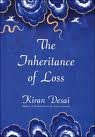
The Inheritance of Loss by Kiran Desai


In this enchanting and hauntingly beautiful book, I have discovered in Kiran Desai what might be called the reincarnation of Salman Rushdie in female form, at least from the standpoint of prose. The magical language and drama in this wonderful book also calls to mind Arundati Roy's The God of Small Things. It should also be noted that Desai won the Man Booker Award for this novel, as did Roy for hers. At the highest level it is about what the British left behind in India and how Indians have been shortchanged - this loss has been their inheritance. It is a story about how the classes continue to struggle after colonialism. For many Indians, both at home and overseas, it seems hopeless. At the outset, the question is posited - "Could fulfillment ever be felt as deeply as loss ?" (p. 2). Perhaps this is so for only one character, revealed on the final page of the book. Dealing with issues of globalization, multiculturalism, terrorism and inequality, Pankaj Mishra wrote (2/12/06) for The New York Times "it seems the best kind of post-9/11 novel."
The story takes place in Kalimpong, in the northernmost area of West Bengal, high in the mountains under a "looming" (p. 197) Kanchenjunga, the world's 3rd tallest peak, "solid, extraordinary, a sight that for centuries had delivered men their freedom and thinned clogged human hearts to joy." (p. 277). The action is set in 1985 (p. 8) in a region with factions derived from the neighboring states of Nepal and Bhutan, and the Indian state Sikkim (formerly a sovereign country). Desai lays the political groundwork - the Indian-Nepalese "wanted their own country." (p. 9). It is important to understand the politics in order to appreciate the context of the novel. The Gorkha National Liberation Front ("GNLF") is a political party in northern West Bengal, India, formed in 1980. During the 1980s, the GNLF led an intensive and often violent campaign for the creation of a separate Gorkha state in the Nepali-speaking areas in northern West Bengal; the movement reached its peak around 1985-1986, the time frame of the book. In 1988, the GNLF signed the Darjeeling Hill Accord, which created the Darjeeling Gorkha Hill Council in exchange for the GNLF giving up its demand for Gorkhaland for the time being.
Specifically, the book is about the lives of two adolescent Indians from very different backgrounds, Sai, the adopted granddaughter of Anglophile Judge Jemunhai Patel, a member of the Indian Civil Service ("ICS") who ultimately questions her own Anglicised lifestyle and Biju, the Judge's cook's son, who has gone to New York as an illegal immigrant, trying to make a buck in a city he never engages. Meanwhile, Sai falls in love with her Nepalese tutor, Gyan, despite being in different castes - his reciprocity is sorely tested by his obligations to the GNLF. Gyan grapples with this conundrum "how could you have any self-respect knowing that you didn't believe in anything exactly ?" (p. 260). In his black and white world, ultimately he chooses political belief over love.
As this budding romance evolves, Desai does a wondrous job exploring the adolescent girl's discovery of her own sexuality and there is a precious line describing her "plumpness jiggliness firmness softness, all coupled together in an unlikely manner, must surely give her a certain amount of bartering power ?" (p. 74).
The book is filled with oddball characters, the aristocratic Lola and her sister Noni who live at Mon Ami, a neighboring house, and the neighbors Uncle Potty (farmer and drunk) and his friend Father Booty. I commiserated with Uncle Potty's food preferences "No ghas phoos, no twigs and leaves ! said Uncle Potty firmly. He never ate anything green if he could help it." (p. 212). Along this line, Lola makes a funny comment (p. 214) attributable to her now-dead husband about "real" Chinese food. "Chinese food in China was quite another matter. A much worse matter, in fact. He described the hundred-day-old egg...buried and dug up as a delicacy, and everyone groaned with horrified delight." In my travels to China, I have learned that indigenous food is tough to swallow.
Ultimately, the GNLF wreak havoc on this small hill town, destroying everyone's lives in the process. Despite the tumult, Biju, makes the trip back home, is stripped of all his worldly possessions, but in the end reunites with his father. He is virtually the only character who remains faithful to his spiritual beliefs and avoids the emotional loss that all the other characters succumb to.
It is forgivable, but Desai goofs a few times on period culture. She uses the term "PC" (politically correct) (p. 201), which did not come into current usage until 1990. Also there is mention of a laptop (p. 285) computer at an airport scene, oops ! On language a funny coincidence, she uses the word "rictus" (p. 232) just as did Martin Amis, reviewed below.

Tuesday, July 20, 2010

Unaccustomed Earth by Jhumpa Lahiri


Jhumpa Lahiri is perhaps best known through her novel Namesake that was made into the 2006 feature film by the fabulous director Mira Nair (Salaam Bombay!, Mississippi Masala, Monsoon Wedding). In Namesake she explores the adjustments Indian immigrants make in coming to America. Unaccustomed Earth takes it a step further and examines relations across 3 generations, taking into consideration the nuances of Indians born in the U.S. Nee Nilanjana Sudeshna, her Kingston, Rhode island, kindergarten teacher insisted on calling her the easier pet name Jhumpa. Although born in London, she considers herself American, having moved to the U.S. at age 3. Cynical readers have dubbed her an ABCD or American-Born Confused Desi, usually reserved for Indians born in the U.S. The term "desi" comes from the word "des" (homeland) in Sanskrit and Hindi; "desi" is used to mean anyone from the Indian subcontinent.
The short stories in this collection are by no means complex. In fact, for the most part, very little happens. The pleasure of the text, to quote Barthes, is in the art of the story teller, the mastery of language. Of course, the theme is always related to gender roles and the Bengali immigrant experience and letting go of culture and homeland traditions in a new world. Most of the stories take place in Boston and Cambridge. Lahiri knows the turf, as anyone who has lived in Boston will recognize the "view of the Citgo sign, draining and filling with color" (p. 214), a local icon which in a bizarre timing coincidence received mention (7/25) in the Sunday New York Times Sports Section (p. 3), since over 9,000 feet of lights were receiving brand new LEDs, 1200 feet from Fenway Park home plate. Back to the text - however, on more than one occasion she calls the Harvard Bridge the Mass Avenue Bridge (p. 281). Just an aside, but I got a kick out of a reference to Jan van Eyck's famous painting The Arnolfini Marriage, in which there appears "a convex mirror that reflected everything in the painting" (p.145). This optics riddle is the subject of a well known textbook problem on geometrical optics by Hecht and Zajac, Optics (1974 edition, p. 163).
In the eponymously titled opening story, a young married woman has made the choice to abandon her legal career, much to the consternation of her visiting father, a recent widower. The story is more about the fragility of their relationship, about what they fail to say to each other over the years. In the final scene, she inadvertently discovers a misplaced postcard addressed to her father's new found female companion, totally unbeknownst to her. All the meaningful conversations that never happened about her strained relation with her Latino husband and her father's life changes never take place, the reader must decide - Is it Indian culture or more universal ?
The best story, Hema and Kaushik, is in 3 parts. The first two parts are related through the minds of the young girl Hema and subsequently, her childhood friend Kaushik. The first part describes foremost the difference in cultural traits between two Indian families living in the same house with each other in Boston for one month, as a result of a second Indian family, far less conservative and wealthy, getting settled. Hema (six) is taken by the older boy Kaushik (nine). The second part relates Kaushik is a college student returning home for the holidays and his reaction to and resentment of his father's new Bengali wife, and his anguish over the loss of his mother to cancer. In the final part, the two protagonists have a chance meeting in Rome years later. Lahiri is a master at tempo and the reader feels the rush as the two childhood friends are reunited. Alas, Hema is on her way to Calcutta to wed a less than satisfactory mate though an arranged marriage - her tempestuous relation with her childhood friend is quenched but has no hope for survival. This part is much less about Indian cultural values and more about the general human condition. Here the author really transcends the themes that make up the earlier stories.
Charlie Rose interviewed her about the book (5/27/08) (http://www.charlierose.com/), complimenting her on her remarkable observational powers but floors her when he paraphrases Time critic Lev Grossman, by saying that there is no human or narration suspense in her stories. Specifically, Grossman states "Lahiri's stories are grave and quiet and slow, in the 19th century manner. They don't bribe you with humor or plot twists or flashy language; they extract a steep up-front investment of time from the reader before they return their hard, dense nuggets of truth. It's difficult to quote from her stories: they refuse to sum themselves up with a neat final epiphany, and Lahiri doesn't write one-liners" (5/8/08) (www.time.com/time/magazine).

Saturday, July 10, 2010

The Second Plane by Martin Amis


Son of Sir Kingsley Amis (famous English novelist), Martin Amis is known as the enfant terrible of British fiction. He is a controversial essayist as well. He is author of some of Britain's best-known modern literature, influenced by Nabokov and Bellow, and has influenced new writers such as Zadie Smith and Will Self. He is a true littérateur. This controversial book of 14 essays about 9/11 and subsequent events is culled from articles first appearing in the Guardian, The Observer, The Times, The New Yorker, and The New York Times between 2001-2007. The book was published as a reaction to Marxist literary critic Terry Eagleton (fellow U. Manchester professor) accusing Amis of racism based on an interview conducted by Ginny Dougary of The Times on Sept. 9, 2006 (http://www.ginnydougary.co.uk/). This collection of published essays is loaded with insight, some of it over the top. The reader should note that these essays transgress the suicide bombings in London in July 2005.
The first essay is eponymously titled The Second Plane and was written only a few days after 9/11. The opening sentence is poignant - "It was the advent of the second plane, sharking in low over the Statue of Liberty: that was the defining moment. Until then, America thought she was witnessing nothing more serious than the worst aviation disaster in history; now she had a sense of the fantastic vehemence ranged against her." I remember turning on the TV in my office at about 9am that day and seeing the second plane in real time. Amis nails it. "It was well understood that an edifice so demonstrably comprised of concrete and steel would also become an unforgettable metaphor. The moment was the apotheosis of the postmodern era - the era of images and perceptions." Amis is well known for commenting on the absurdity of the postmodern condition. He is keenly aware of Americans' isolationism - "Various national characteristics - self-reliance, a fiercer national patriotism than any in Western Europe, an assiduous geographical incuriosity - have created a deficit of empathy for the sufferings of people far away." Later in the book (p. 53) he sees the attacks as a paradigm shift. "Paradigm-shifts open a window; and, once opened, the window will close." September 11 was instantly unrepeatable, the tactic was obsolete by 10 a.m. the same morning, witness the start of the rebellion on United 93, once passengers heard on cell phones that the twin towers had been hit. It is curious to note that United 93 was delayed by 30 minutes - had it left on time, it may have met it's White House or Capital target !
Reviewers of the book have found Amis lacking in authoritative knowledge of key areas under consideration, ironically, he engages just this topic in the second essay The Voice of the Lonely Crowd. "An unusual number of novelists chose to write some journalism about September 11 - as many journalists more or less tolerantly noted. I can tell you what these novelists were doing: they were playing for time. The so-called work in progress had been reduced, overnight, to a blue streak of autistic babble." Amis reminds us that "novelists don't normally write about what's going on; they write about what's not going on." Good one. Unfortunately, many critics felt that in the case of this book, Amis should have heeded his own advice. I can tell you words like Marfanic, sordor, rictus, and antinomian are not typical journalistic words. He disparages all religion "To be clear: an ideology is a belief system with an inadequate basis in reality; a religion is a belief system with no basis in reality whatever.....if God existed, and if he cared for humankind, he would never have given us religion." On this I could not agree more.
In The Wrong War, Amis is thinking how Bush must have reasoned, that once we launch an attack, "Then at last we will have Saddam's full cooperation in our weapons inspection, because everything we know about him suggests that he will use them all." Of course, Saddam was no friend to Islamists, particularly Shiites (Iran axis), he is "in reality, a career-long secularist - indeed an "infidel" according to bin Laden." Amis opines that Bush was more religious than Saddam ! It is ironic when Tony Blair remarks in an interview conducted by Amis how politics and religion got so intermingled in America under Bush.
Amis creates a short story, In the Palace of the End, in which many body doubles, a spoof on Saddam's public body doubles, partake in the orgiastic excesses of Palace life as well as playing a role in the torture chambers. A reviewer has noted that considerable effort has been put into offering neologisms for torture techniques. Amis introduces the reader (p. 50) in Terror and Boredom : The Dependent Mind to the term "Islamism" wherein Islam is not only a religion but also a political system and that modern Muslims must return to the roots of their religion and unite politically. Much criticism has been leveled against Amis that he is not merely an "Islamismophobe" (p.71) but an "Islamophobe" as well. In his writings his targets shift from radicals to the Muslim world at large.
In The Last Days of Muhammad Atta, he creates a constipated character who has not moved his bowels since May. When deciding what day to attack, it was suggested "Two branches, an oblique stroke, and a lollipop" (p. 103). In Iran and the Lord of Time, Amis postulates "Rule number one: no theocracy can be allowed to wield a nuclear weapon. For the Iranians, as an Israeli official put it, Mutual Assured Destruction "is not a deterrent. It's an incentive.""
Amis is greatly concerned with Muslim demographics, western women in Europe produce an average of 1.4 children (2.1 is required for maintaining the status quo), Muslim women are producing 3.5 children. He's assuming all Muslims are radical.
Hard to tell on this blog, but book cover photo is view looking up, standing between twin towers, smoke coming from the South Tower. It is a spectacular shot !

Thursday, June 24, 2010

The Girl Who Kicked the Hornet's Nest by Stieg Larsson


You know the Millennium Trilogy has entered American pop culture when Nora Ephron, film director (Silkwood, Sleepless in Seattle, When Harry Met Sally), writes an hysterically funny satire in The New Yorker (July 5) entitled "The Girl Who Fixed the Umlaut." The humor is completely lost in translation, I won't try to paraphrase, so I urge the reader to enjoy Ephron's oh-so-clever piece at www.newyorker.com/humor. For all but die hard fans, this book suffers a bit from TMI, Ephron gets it right when she mimics a route in Stockholm that sounds like a GPS on steroids - "[Mårtensson] got into his Volvo and drove towards the city but turned off to go across Stora Essingen and Gröndal into Södermalm. He drove down Hornsgatan and across to Bellmansgatan via Brännkyrkagatan. He turned left onto Tavastgatan at the Bishop's Arms pub..." (p. 251). All jesting aside, the Stockholm City Museum offers Millennium Walking Tours, check it out at http://www.stadsmuseum.stockholm.se/. In fact the Södermalm area south of Folkungagatan ("SoFo," I mean, what else could it be ?) has become the trendsetting epicenter of the city. Get this, The New York Times Sunday Travel Section just did an article (June 20) entitled "Not so Sinister in Stockholm," detailing the M3 neighborhood.

This final volume can be considered the "day of reckoning" on the events that have transpired in M1 and M2. A silent but omnipresent actor enters the stage, the Government, in the form of the Section for Special Analysis (SSA) (p. 82), Säpo's autonomous top secret division, run by some die hard Cold Warriors. Since misinformation is the basis of espionage (p. 144), the author succeeds in building a very complex dialogue - the reader is typically prepped on reality and can see the misinformation propagate. M3 showcases true storytelling mastery. Larsson is making a bigger statement here, related to the constitutional rights of LS and the crime against her for which the State is guilty (p. 279). The SSA is acting outside it's constitutional mandate (p. 281) in a conspiracy. Many readers complain of the protracted discussions of these human rights issues, but Larsson is choosing to use his crime thriller to make a case.
Lisbeth Salander has been compared to Lara Croft (popularized in the 1991 Angelina Jolie film Tomb Raider) and such a reference appears in M3 when she is communicating with her hacker partner Plague (p. 240) and an animated Lara Croft-like figure stepped out on her PDA.

Fröken Salander is a poster girl for injustice. Larsson, a self proclaimed feminist makes the case again and again that women have been victimized for, shall we say. Millennia ? As a preface to M3, he posts a little piece about Amazon women (p. 147) and the etymology of the word "Amazon." Later he references the Fon of Dahomey, a women's army in west Africa, finally defeated in 1892.
The book is rife with vigilantism, consider the private investigator Linder - "[Linder] knew that technically she had committed one crime after another this evening, including unlawful restraint and even aggravated kidnapping. She did not care. On the contrary, she felt almost exhilarated." (p. 401).
M3 is about hacking and of course we learn in M1 and M2 that Lisbeth is a hacker extraordinaire, under code name Wasp. So the Palm Tungsten T3 PDA (p. 237) is pictured here as co-star ! Lisbeth is held captive in the hospital or jail for the first 25 chapters of the book. As such her control is truly "action at a distance," all through her PDA, which is smuggled into her hospital room. In the end, all the loose ends are tied together, one could say "Larsson nails it." But, you'll see what I mean.
Post script - I cannot overstate how I enjoyed the reference to Sergio Leone's spaghetti western masterpiece, Once Upon a Time in the West, as a ring tone for Monica Figuerola's mobile phone (p. 471).